There is a real shift that's occurring in how Americans navigate the internet, social media, and content online. This shift is showing up in the data before it shows up in the headlines. AI content has now surpassed man made content on the web and its not slowing down. In a new survey we conducted with 1,000 Americans, a clear picture is emerging of a country that has stopped taking online content at face value and started asking sharper questions about who made it, why, and whether it can be trusted at all.
Our findings point to a year of quiet but measurable change. Trust in reviews is wobbling, trust in news is falling fastest, named human authors are rising as one of the most powerful signals online, and most Americans are actively narrowing the list of sources they rely on. When we put all these numbers and findings together, we wanted to find a more hopeful story than the usual trust-in-decline narrative suggests.
Americans aren't checking out of the internet. They're rebuilding their relationship with it, on their own terms, and the rest of this report is the story of how.
Key Findings:
- 73% of Americans now question whether online content is real or AI-generated, with the threshold for trust shifting measurably in just twelve months.
- Gen Z is more than twice as confident as Boomers at spotting AI content, but is also more likely to have been fooled by a fake review in the past year.
- 71% of Americans say customer reviews are now among the hardest content to trust, but news articles are losing trust the fastest, with 63% trusting them less than they did a year ago.
- "Written by a real, named person" is now the second most powerful trust signal online, ahead of citations, news coverage, and source reputation.
- 59% of Americans have reduced the number of sources they trust in the past year, quietly rebuilding their information diets around fewer outlets, more named individuals, and surprisingly more long-form formats.
Americans Aren't Losing Trust Online. They're Getting Sharper.
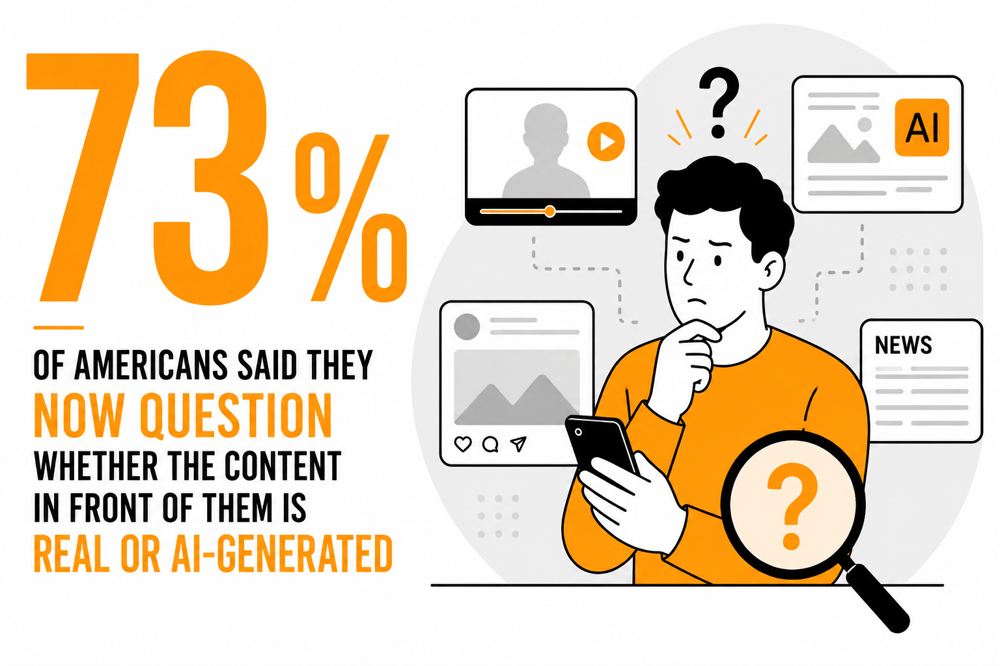
Something quietly remarkable is happening to the way Americans read the internet. In our recent survey of 1,000 Americans, 73% said they now question whether the content in front of them is real or AI-generated, a threshold that has shifted measurably in just the past twelve months.
What looks at first like a crisis of confidence is actually something more useful. A country full of people who used to scroll on autopilot is learning, in real time, to read with their eyes open.
But Open Eyes Don't Always Mean Sharp Ones, Especially for the Generation That Grew Up Online
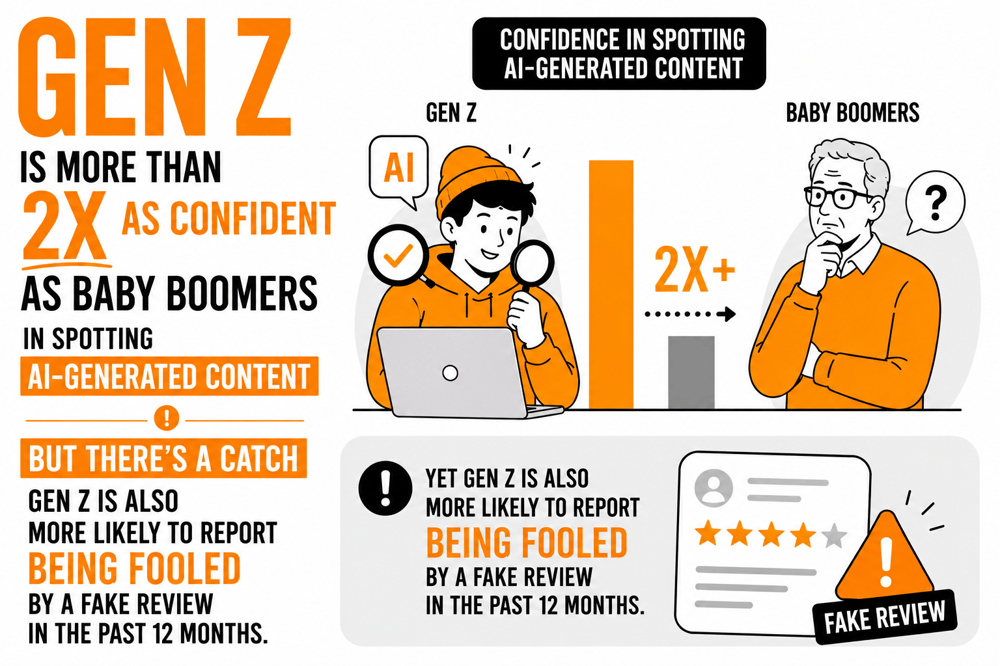 That new alertness, though, isn't distributed evenly, and it isn't always accurate. Our research found that Gen Z is more than twice as confident as Boomers in their ability to spot AI-generated content, yet Gen Z is also more likely to report being fooled by a fake review in the past twelve months.
The generation that came of age inside the feed trusts its instincts the most and gets caught the most. The generation that came to the internet later moves more slowly and second-guesses more. Neither group has the answer yet, but both are circling it.
Confidence is rising on one end, caution is hardening on the other, and somewhere in the middle, a more honest kind of digital literacy is starting to take shape.
Reviews Are the Hardest to Trust, But News Is Losing Ground the Fastest
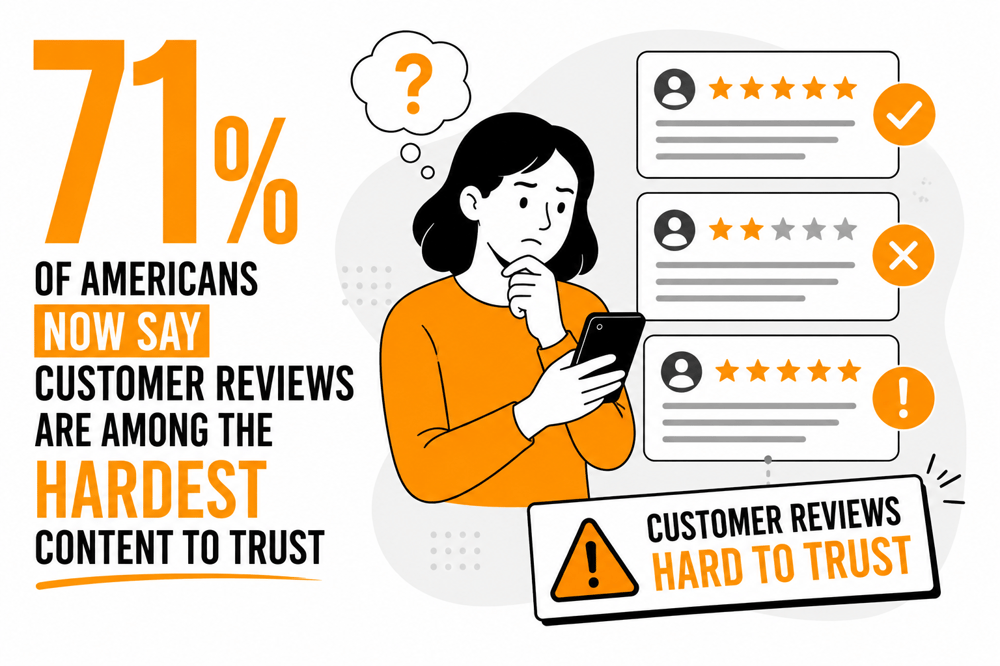
That literacy is being tested most in the places Americans used to lean on without thinking. Our findings show that 71% of Americans now say customer reviews are among the hardest content to trust, a striking number for a format that built modern e-commerce.
But the steepest drop isn't in the review section. It's in the newsroom. Based on data we gathered, 63% of Americans say they trust news articles less than they did a year ago, making news the single fastest-eroding category in our study.
The encouraging part is what sits underneath those numbers. Americans aren't writing off reviews or news wholesale. They're applying pressure, asking sharper questions, and signaling to publishers and platforms exactly where the bar has moved. The formats that respond will come out of this decade stronger than they went in.
The Byline Is Back: Why a Real, Named Author Now Outranks Citations and Source Reputation
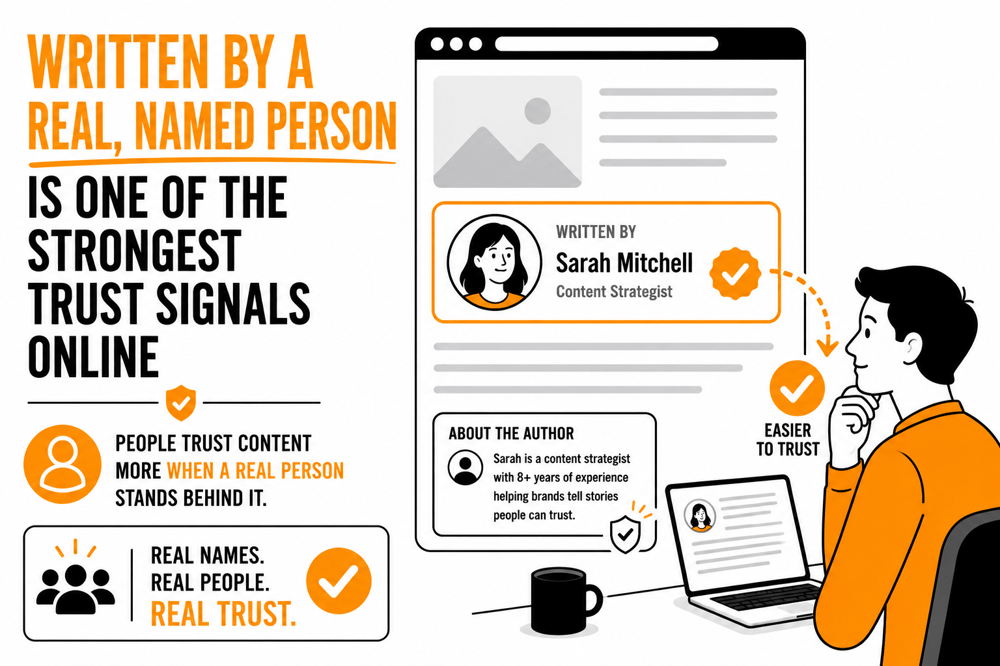
What's rising in place of those eroding defaults is something almost old-fashioned. Our research found that "written by a real, named person" is now the second most powerful trust signal online, ranking ahead of citations, news coverage, and even the reputation of the source itself.
In a feed full of synthetic voices and unattributed copy, a human name attached to a piece of work has quietly become one of the most valuable things on the internet. The optimism in this finding is hard to miss.
After a decade of platforms flattening authorship into algorithms and brand accounts, Americans are reaching back toward the people behind the words. Bylines, faces, credentials, and accountability are doing real work again. Trust, it turns out, still wants someone to put their name on it.
The Quiet Rebuild: Americans Are Trimming Their Trusted Sources, Not Abandoning Them
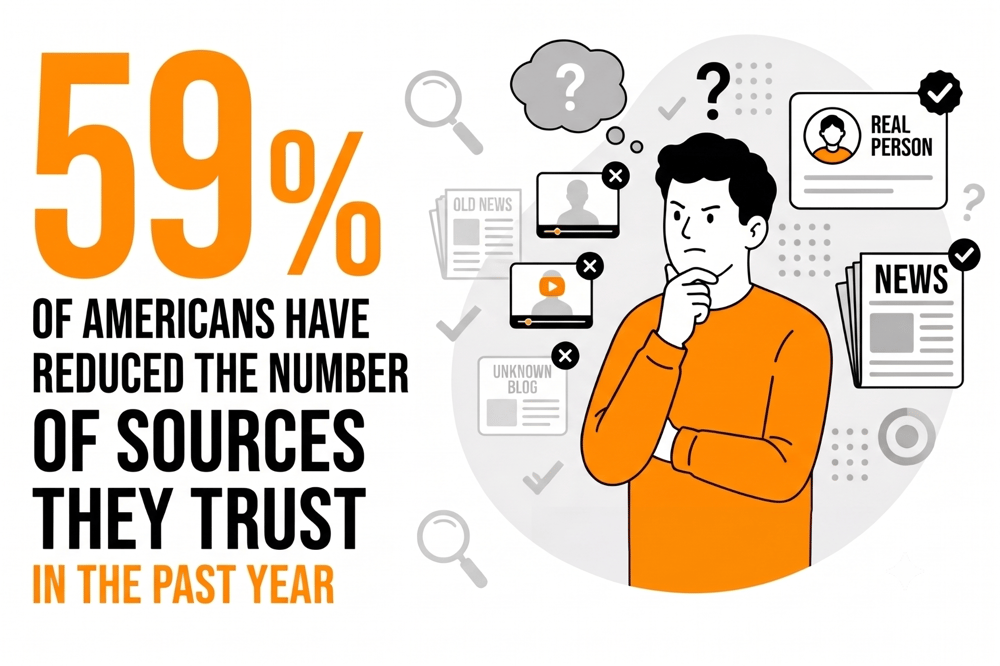
That instinct to reach for something human is showing up in behavior, not just opinion. Our findings show that 59% of Americans have reduced the number of sources they trust in the past year, quietly rebuilding their information diets around fewer outlets, more named individuals, and, perhaps most surprising of all, more long-form formats.
After years of being told that attention spans were collapsing and that the future belonged to the shortest possible clip, Americans are doing the opposite. They're narrowing the field, going deeper with the sources that earn it, and rewarding the writers, publishers, and creators willing to slow down and show their work.
None of this looks like a crisis up close. It looks like a country relearning how to read the internet on its own terms, choosing fewer voices, better evidence, and real people over the noise. The trust economy isn't shrinking. It's getting more selective, and the outlets that meet that moment are the ones who will define what comes next.
Summary
What our research keeps pointing back to is a story that's easy to miss when you're staring at the headlines. Americans haven't given up on the internet. They're growing into it. They're asking better questions, raising the bar for the people and outlets they let into their daily reading, and rewarding the kind of honest, human, carefully made work that the early web was supposed to be about in the first place.
The skepticism showing up in our numbers isn't cynicism. It's care. It's a country deciding that what it reads, watches, and shares actually matters, and choosing to be more deliberate about it. That's not the end of trust online.
That's the beginning of a better version of it, built by readers who finally have the tools, the instincts, and the will to demand it. The internet is being rewritten right now, quietly, by the people who use it most. And if our findings are any indication, the next chapter is going to be worth reading.
Methodology:
The findings in this report are based on an original survey we conducted with 1,000 Americans, designed and fielded in-house. Every statistic cited is drawn directly from our own data set, not licensed or aggregated from third-party research, making the trust signals captured here unique to this study. Outside research is referenced only to contextualize our findings against the broader landscape.
Fair Use
Users are welcome to utilize the insights and findings from this study for noncommercial purposes, such as academic research, educational presentations, and personal reference. When referencing or citing this article, please ensure proper attribution to maintain the integrity of the research. Direct linking to this article is permissible, and access to the original source of information is encouraged.
For commercial use or publication purposes, including but not limited to media outlets, websites, and promotional materials, please contact the authors for permission and licensing details. We appreciate your respect for intellectual property rights and adherence to ethical citation practices. Thank you for your interest in our research.