
Advanced Link Building

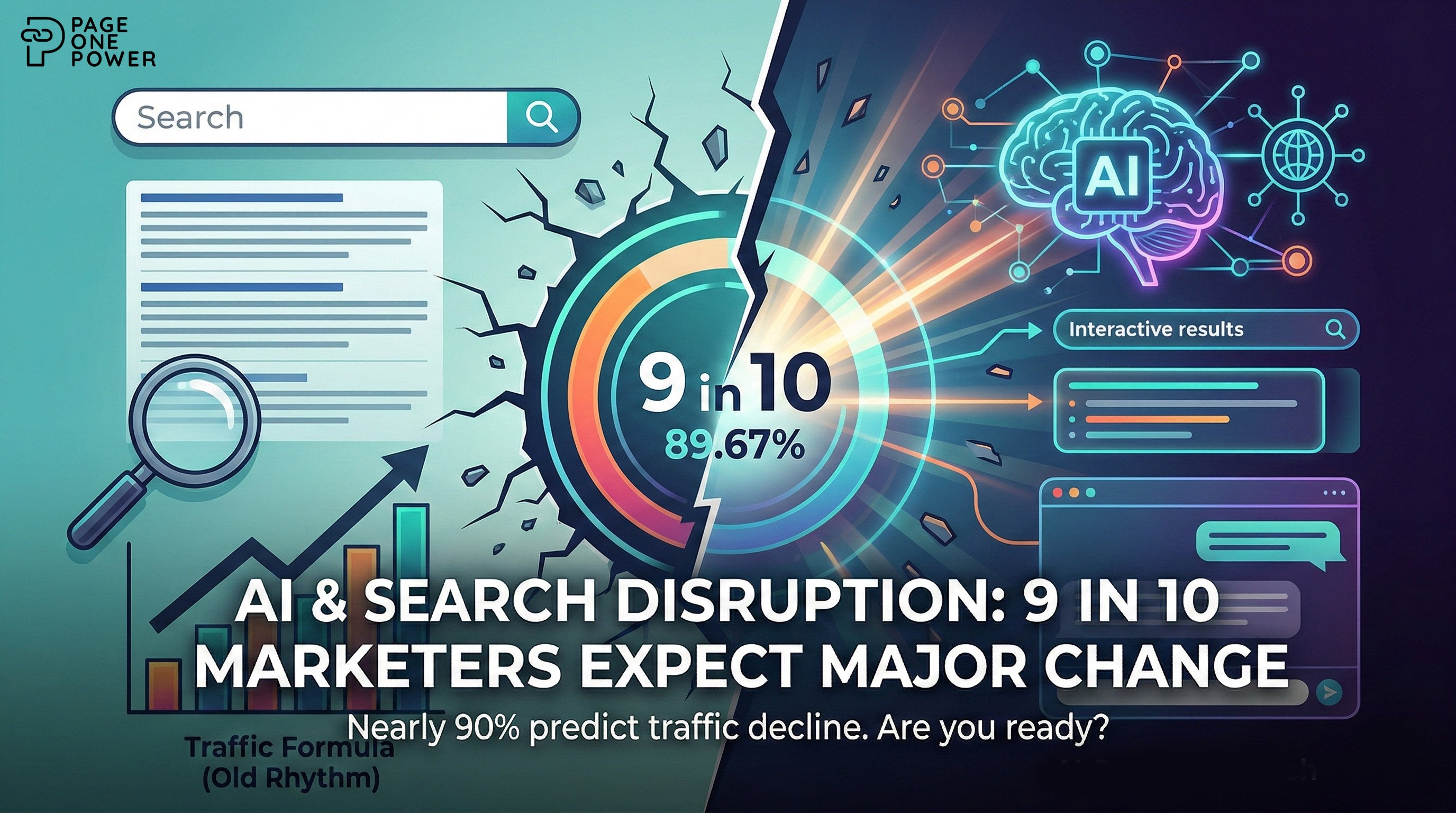
For more than twenty years, search marketing followed a reliable rhythm: optimize your content, get links, rank high on Google, earn the click, and convert the visitor. It was a formula marketers could refine, measure, and scale.
That formula is now under serious pressure.
Our survey data from 600 marketing professionals shows just how dramatic the shift feels inside the industry. Nearly 90% (89.67%) believe AI-powered search will reduce traditional search engine traffic. Almost half (49%) expect that decline to be significant.
This isn’t a fringe opinion. It’s a near-consensus.
Marketers aren’t debating if AI search will change traffic patterns. They’re preparing for when it does.
From Blue Links to Synthesized Answers
The way people search is evolving fast. Instead of scrolling through a list of links, users are increasingly getting direct, AI-generated answers. Conversational interfaces, summarized responses, and zero-click results are becoming the norm.
That shift changes everything.
When users no longer need to click through to multiple websites, organic traffic—the lifeblood of many brands—naturally declines. For companies that built their growth engines on search visibility, this is more than a technical tweak. It’s a structural change in discovery.
But here’s what makes this moment so interesting: marketers aren’t panicking.
They’re investing.
The Pivot From SEO Strategy to AI Strategy
The survey data shows a clear directional shift:
- 44.6% of marketers are investing in AI tools
- 40.8% are creating AI-optimized content
- 36.8% plan to increase AI-related marketing investment over the next 12 months
This isn’t casual experimentation. AI visibility is becoming operational. It’s showing up in budgets, workflows, and content strategies.
The core question is changing. It used to be: How do we rank higher?
Now it’s becoming: How do we get more visibility?
That distinction matters.
Traditional SEO was about competing for position on a results page. AI search is about being referenced within the answer itself. Instead of fighting for the click, brands are competing for credibility.
And credibility plays by different rules.
AI systems prioritize structured data, authoritative sources and backlinks, factual clarity, and consistency. Thin content and keyword stuffing don’t stand a chance in this environment. Expertise, research, and trust signals do.
In many ways, AI search is raising the bar.
The Visibility Blind Spot
Yet there’s a surprising tension in all this forward movement.
While marketers are investing heavily in AI-related initiatives, measurement hasn’t fully caught up. Nearly one in three marketers aren’t tracking whether their brand appears in AI-generated answers at all.
- 24.5% say they’re not tracking AI visibility
- 12.2% didn’t even know tracking was possible
That’s a significant gap at a time when budgets are shifting
Companies are reallocating resources, creating AI-optimized content, and purchasing new tools—but many don’t yet know whether their efforts are actually translating into visibility inside AI systems.
It’s a modern marketing paradox: proactive investment paired with reactive measurement.
Without structured tracking frameworks, brands are essentially operating in partial darkness. They know change is coming. They’re spending accordingly. But they’re still defining what success looks like.
That learning curve may define the next phase of competitive advantage
Bracing for Impact—Without Panic
What’s striking about the data isn’t fear. It’s composure.
When nearly 9 out of 10 professionals expect disruption, you might anticipate alarm. Instead, the tone across the industry suggests adaptation rather than retreat.
Marketers seem to recognize that AI search doesn’t eliminate the need for content. It reshapes what kind of content wins.
In an AI-driven environment:
- Clear, structured information matters more
- Demonstrated expertise carries greater weight
- Original research becomes more valuable
- Brand authority compounds over time
Visibility isn’t just about being found anymore. It’s about being trusted.
As AI systems synthesize responses from multiple sources, they implicitly reward consistency and reliability. Brands that become dependable reference points—those frequently cited, quoted, or referenced—gain an entirely new layer of influence.
In that sense, ranking first may become less important than being included.
A Structural Shift in Discovery
When nearly 90% of an industry anticipates traffic shifts, it signals belief in structural change—not a passing trend.
Search behavior is compressing. The journey from question to answer is shorter, more conversational, and less dependent on browsing. That has implications for the traditional marketing funnel.
Fewer clicks at the top mean brands must think differently about awareness, consideration, and authority-building. The surface area of visibility is changing.
But there’s opportunity in that compression.
Brands that position themselves as primary sources—through proprietary data, expert commentary, thought leadership, and structured clarity—may earn disproportionate representation inside AI systems.
The game shifts from volume to authority. And authority compounds.
The Road Ahead
The story emerging from the data is one of urgency mixed with experimentation.
- Marketers expect change.
- They are reallocating budgets.
- They are building AI-optimized content strategies.
- They are investing in tools.
But many are still refining how to measure impact in this new landscape. That measurement gap will likely separate early movers from true leaders. The winners in AI search won’t simply be the fastest to invest. They’ll be the fastest to understand what visibility actually means—and how to track it. If traditional SEO was about climbing rankings, AI search may be about earning trust at scale. The era of predictable traffic from blue links may be fading. In its place, a new competitive dynamic is emerging—one built on expertise, structure, and credibility.
Nearly 9 in 10 marketers believe disruption is coming. The real question isn’t whether AI search will reshape traffic. It’s which brands will reshape themselves quickly enough to benefit from it.
Methodology
The survey was conducted in March 2026 among 600 marketing professionals across a range of functions including marketing leadership, digital marketing, content marketing, growth marketing, brand marketing, and marketing operations. Respondents were asked about their expectations, strategic adjustments, investment decisions, and measurement practices related to AI search and its impact on traditional organic traffic. Data reflects self-reported responses and was fielded via an online survey platform.